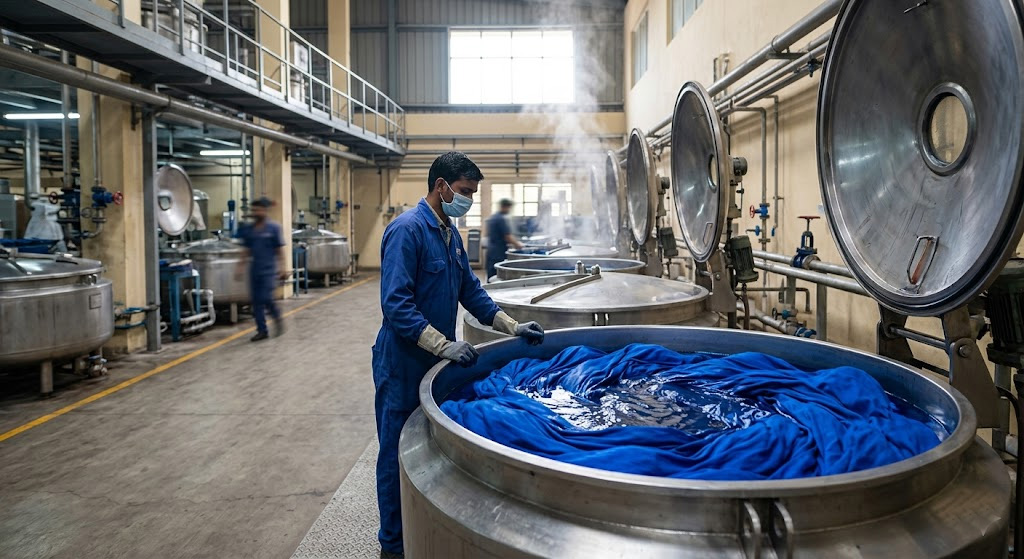
High-Performance Textile Dyes for Cotton Garments, Knitwear & Industrial Textile Processing
Cotton remains one of the most widely used textile fibers in the global textile and garment industry due to its softness, breathability, comfort, versatility, and suitability for mass apparel manufacturing. As global demand for cotton garments, home textiles, knitwear, denim, and fashion fabrics continues increasing, the need for high-performance reactive dyes for cotton fabric dyeing has become more important than ever.
Textile manufacturers worldwide require dyes capable of delivering:
- vibrant shades
- excellent wash fastness
- strong fixation
- consistent dyeing performance
- export-quality results
- sustainable processing compatibility
Megha International supplies industrial textile dye solutions designed for cotton textile processing, garment manufacturing, knitwear production, textile printing, and export-oriented textile applications requiring industrial consistency and large-scale dyeing support.
Reactive dyes are considered one of the best dye categories for cotton fabrics because they chemically bond with cellulose fibers, producing durable and long-lasting coloration suitable for modern textile manufacturing requirements.
As textile industries increasingly focus on:
- export quality
- sustainability
- process efficiency
- color consistency
- environmental responsibility
the demand for reliable reactive dyes manufacturers in India continues rising across international textile markets.
Why Reactive Dyes Are Preferred for Cotton Fabric Dyeing
Reactive dyes are specially designed to form a strong covalent bond with cotton fibers during the dyeing process.
This bonding mechanism provides:
- excellent wash fastness
- superior color durability
- bright shade development
- long-lasting fabric appearance
Compared to many conventional dye systems, reactive dyes provide:
- better shade brilliance
- improved fixation
- higher textile quality
- superior dye penetration
This makes them ideal for:
- cotton garments
- knitwear
- fashion fabrics
- home textiles
- industrial textile applications
Major Cotton Fabric Applications Using Reactive Dyes
Garment Manufacturing
Reactive dyes are widely used in:
- t-shirts
- shirts
- trousers
- fashion garments
- casual wear
- children’s wear
Textile manufacturers require:
- consistent shades
- export-quality appearance
- durable washing performance
Knitwear Industry
Knitwear applications include:
- leggings
- sportswear
- innerwear
- activewear
- hosiery
Reactive dyes help maintain:
- softness
- stretch compatibility
- vibrant coloration
Home Textile Industry
Reactive dyes are extensively used for:
- bed sheets
- towels
- curtains
- upholstery fabrics
- furnishing materials
Industries require:
- wash durability
- color retention
- fabric softness
Denim Processing
Cotton denim fabrics require dyes capable of:
- strong penetration
- washing compatibility
- durable appearance
Applications:
- jeans manufacturing
- fashion denim
- washed garments
Important Properties Textile Mills Look for in Reactive Dyes
Wash Fastness
Cotton garments undergo frequent washing, so textile industries require dyes with strong wash resistance.
Important fastness properties include:
- washing fastness
- rubbing fastness
- perspiration fastness
- light fastness
Poor fastness may result in:
- fading
- customer complaints
- export rejection
Shade Consistency
Large textile mills require:
- repeatable shades
- batch consistency
- stable dyeing performance
Consistency is critical for:
- garment exports
- bulk textile production
- fashion collections
High Fixation
High fixation reactive dyes reduce:
- dye wastage
- processing losses
- wastewater contamination
Benefits:
- improved process efficiency
- lower production cost
- sustainable manufacturing support
Bright Shade Development
Fashion industries increasingly require:
- vibrant shades
- trendy colors
- premium textile appearance
Reactive dyes provide:
- strong color yield
- excellent brightness
- superior fabric aesthetics
Types of Reactive Dyes Used for Cotton Dyeing
Cold Brand Reactive Dyes
Suitable for:
- low-temperature dyeing
- knitwear
- cotton garments
Advantages:
- energy-efficient processing
- soft fabric handling
- bright coloration
Hot Brand Reactive Dyes
Used for:
- woven fabrics
- industrial textile processing
- high fixation applications
Benefits:
- durable shades
- improved fastness
- strong fixation
Vinyl Sulphone Reactive Dyes
Widely used because they provide:
- excellent exhaustion
- strong color yield
- reliable fixation
Applications:
- cotton fabrics
- garment dyeing
- textile printing
Multifunctional Reactive Dyes
Designed for:
- sustainable processing
- reduced hydrolysis
- improved fixation efficiency
Preferred by:
- export textile mills
- eco-conscious garment manufacturers
Why Cotton Textile Industries Prefer Reactive Dyes
Reactive dyes support:
- high-speed textile production
- export-quality manufacturing
- sustainable dyeing systems
- consistent fabric appearance
Textile mills prefer reactive dyes because they help achieve:
- premium fabric quality
- reduced rejection rates
- efficient production workflows
Sustainable Trends in Cotton Dyeing Industry
Global textile industries increasingly focus on:
- eco-friendly dyeing
- reduced water usage
- low salt dye systems
- sustainable textile chemicals
International fashion brands now require:
- environmentally responsible dyeing
- safer chemical systems
- sustainable garment production
This creates growing demand for:
- sustainable reactive dyes
- low impact textile processing
- compliant textile chemicals
Why Bangladesh & Vietnam Textile Industries Prefer Indian Reactive Dyes
Bangladesh and Vietnam are major garment manufacturing hubs supplying:
- Europe
- USA
- UK
- international fashion brands
Textile industries in these countries require:
- export-grade dye quality
- scalable industrial supply
- technical textile support
- sustainable dyeing compatibility
Indian reactive dye manufacturers are preferred because they provide:
- industrial expertise
- customized shades
- competitive pricing
- reliable export logistics
Common Problems Textile Mills Face with Low-Quality Dyes
Using poor-quality reactive dyes can cause:
- uneven shades
- fading issues
- washing problems
- fabric damage
- excessive dye wastage
- production inconsistency
These problems increase:
- export rejection risks
- operational costs
- customer complaints
Therefore textile manufacturers increasingly prefer experienced reactive dye suppliers capable of maintaining industrial consistency.
Why Industries Choose Megha International
Megha International supports textile industries with industrial dye solutions designed for cotton fabric dyeing, garment manufacturing, textile printing, and export-oriented textile production.
The company focuses on:
- industrial textile applications
- export-oriented supply capability
- consistent dye quality
- application-focused solutions
- textile manufacturing support
Industries served include:
- garment manufacturing
- knitwear processing
- woven textile production
- home textiles
- denim processing
- textile printing
Future of Cotton Fabric Dyeing Industry
Demand for high-performance reactive dyes is expected to continue rising because of:
- growing garment exports
- expanding textile production
- increasing fashion industry demand
- sustainable textile manufacturing trends
Future textile industry developments include:
- eco-friendly dyeing systems
- advanced reactive dye technologies
- water-efficient processing
- sustainable garment manufacturing
This will further increase demand for:
- high fixation reactive dyes
- sustainable textile dyes
- export-grade dye solutions
Conclusion
Reactive dyes remain one of the best dye categories for cotton fabric dyeing because they provide excellent wash fastness, vibrant shades, strong fixation, and reliable industrial performance. As global textile industries continue expanding, manufacturers increasingly require dependable reactive dye suppliers capable of supporting export-oriented and sustainable textile production requirements.
Megha International supplies industrial textile dye solutions designed for modern cotton fabric dyeing applications across garment manufacturing, knitwear production, home textiles, denim processing, and industrial textile industries.
As international textile markets continue evolving, experienced reactive dye manufacturers capable of maintaining quality consistency, technical expertise, and scalable industrial supply will remain critical partners for global textile manufacturing industries.
FAQs
Why are reactive dyes best for cotton fabric dyeing?
Reactive dyes chemically bond with cotton fibers, providing excellent wash fastness, vibrant shades, and durable coloration.
Which industries use reactive dyes for cotton fabrics?
Garment manufacturing, knitwear, home textiles, denim processing, and textile printing industries widely use reactive dyes.
What properties are important in reactive dyes?
Wash fastness, shade consistency, fixation, brightness, and sustainability are key requirements.
What are low salt reactive dyes?
Low salt reactive dyes reduce chemical usage and support sustainable textile processing.
Why is shade consistency important in garment manufacturing?
Inconsistent shades can lead to export rejection, garment wastage, and quality control issues.
Which countries import reactive dyes from India?
Bangladesh, Vietnam, Turkey, UAE, Egypt, Indonesia, and African textile markets import textile dyes from India.
What are multifunctional reactive dyes?
Multifunctional reactive dyes offer improved fixation, lower hydrolysis, and better sustainable processing performance.
Why do textile mills prefer high fixation reactive dyes?
High fixation reduces dye wastage, improves efficiency, and lowers environmental impact.
What problems can poor-quality dyes cause?
Poor dyes may cause fading, uneven shades, washing issues, and increased production losses.
Why do international textile manufacturers source dyes from India?
India offers textile expertise, export-scale manufacturing, competitive pricing, and reliable industrial supply capability.