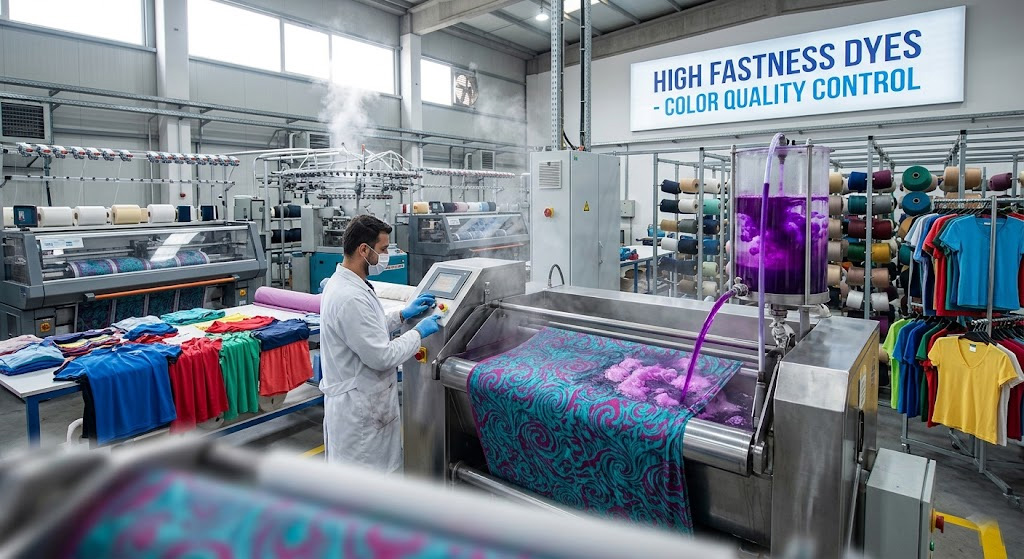
Export-Quality Reactive Dyes for Cotton Dyeing, Knitwear, Garments & Industrial Textile Processing
Modern textile mills and garment manufacturers require textile dyes capable of delivering excellent color durability, consistent shades, strong fixation, and long-lasting fabric appearance across large-scale industrial textile production environments. As global garment exports continue increasing, the demand for high fastness reactive dyes has become one of the most important priorities for textile manufacturers worldwide.
International textile industries require reactive dyes that provide:
- superior wash fastness
- rubbing resistance
- perspiration fastness
- light fastness
- shade consistency
- export-quality textile appearance
Megha International supplies industrial reactive dye solutions designed for textile mills, garment manufacturing, knitwear processing, textile printing, and export-oriented textile applications requiring high-performance dyeing and industrial consistency.
Reactive dyes remain one of the most widely used dye categories in the textile industry because they chemically bond with textile fibers, producing durable coloration and strong washing performance essential for export-quality textile manufacturing.
As global apparel brands increasingly focus on:
- garment durability
- sustainable textile production
- premium fabric quality
- long-lasting colors
textile mills worldwide increasingly prefer reliable reactive dye manufacturers capable of supporting industrial-scale and high-fastness textile dyeing requirements.
What Are High Fastness Reactive Dyes?
High fastness reactive dyes are specially formulated dyes designed to provide superior resistance against:
- washing
- rubbing
- perspiration
- sunlight exposure
- repeated fabric usage
These dyes form a strong covalent bond with cellulose fibers such as cotton and viscose.
\text{Reactive Dye} + \text{Textile Fiber} \rightarrow \text{High Fastness Bonded Fabric}
This bonding mechanism improves:
- color durability
- textile appearance
- garment performance
- export-quality consistency
Why Fastness Properties Are Important in Textile Industry
Global textile industries manufacture garments for:
- fashion brands
- retail chains
- export markets
- industrial textile applications
Poor fastness may result in:
- color fading
- customer complaints
- garment rejection
- reduced product life
- export quality failures
Therefore textile manufacturers prioritize dyes capable of maintaining strong color performance during:
- repeated washing
- daily wear
- industrial laundering
- transportation
- environmental exposure
Types of Fastness Important in Reactive Dyes
Wash Fastness
Wash fastness measures resistance against:
- repeated washing
- detergent exposure
- industrial laundering
This is critical for:
- garments
- home textiles
- knitwear
- fashion fabrics
Rubbing Fastness
Rubbing fastness evaluates color transfer resistance during:
- fabric handling
- friction
- garment usage
Industries require:
- dry rubbing fastness
- wet rubbing fastness
Perspiration Fastness
Garments exposed to sweat require dyes resistant to:
- body moisture
- acidic conditions
- alkaline conditions
Important for:
- sportswear
- activewear
- fashion apparel
- casual garments
Light Fastness
Outdoor and fashion applications require resistance against:
- sunlight exposure
- UV radiation
- fading
Critical for:
- outdoor textiles
- fashion garments
- industrial fabrics
Why Reactive Dyes Are Preferred for High Fastness Applications
Reactive dyes are preferred because they provide:
- strong fiber bonding
- excellent shade brilliance
- superior wash durability
- stable textile performance
Applications include:
- cotton garments
- knitwear
- woven fabrics
- home textiles
- industrial fabrics
Industries Using High Fastness Reactive Dyes
Garment Manufacturing Industry
Garment exporters require:
- export-quality shades
- durable colors
- consistent textile appearance
Applications:
- t-shirts
- shirts
- trousers
- fashion garments
- uniforms
Knitwear Industry
Knitwear applications include:
- leggings
- sportswear
- hosiery
- activewear
- casual wear
Reactive dyes help maintain:
- fabric softness
- shade brightness
- washing durability
Home Textile Industry
Home textile products require:
- repeated wash durability
- color retention
- long-term fabric appearance
Applications:
- bed sheets
- towels
- upholstery
- curtains
Denim Industry
Denim manufacturers require dyes capable of:
- strong penetration
- washing compatibility
- long-lasting appearance
Applications:
- jeans manufacturing
- fashion denim
- washed garments
Important Properties Textile Mills Look for in High Fastness Reactive Dyes
Strong Fixation
High fixation dyes improve:
- color durability
- process efficiency
- reduced dye wastage
Benefits include:
- lower wastewater load
- reduced processing cost
- sustainable manufacturing support
Shade Consistency
Large textile mills require:
- repeatable production shades
- low batch variation
- industrial consistency
This is essential for:
- export garment production
- fashion collections
- bulk textile manufacturing
Bright Shade Development
Fashion industries increasingly require:
- vibrant colors
- premium fabric appearance
- modern textile aesthetics
Reactive dyes provide:
- strong color yield
- bright shades
- superior textile finish
Sustainable Dyeing Compatibility
Modern textile industries increasingly focus on:
- low salt dyeing
- eco-friendly processing
- reduced environmental impact
This creates strong demand for:
- sustainable reactive dyes
- advanced fixation technologies
- efficient textile dyeing systems
Why Export Garment Manufacturers Require High Fastness Dyes
Export garment industries supply products to:
- Europe
- USA
- UK
- global fashion brands
International buyers evaluate:
- washing durability
- garment quality
- color stability
- customer performance
Poor fastness can result in:
- shipment rejection
- brand complaints
- export losses
Therefore garment exporters increasingly require dependable reactive dye suppliers capable of maintaining export-quality textile standards.
Why Bangladesh & Vietnam Textile Mills Prefer Indian Reactive Dyes
Bangladesh and Vietnam are major global garment manufacturing hubs.
These industries require:
- export-quality dyes
- scalable industrial supply
- technical textile support
- sustainable processing compatibility
Indian reactive dye manufacturers are preferred because they provide:
- textile industry expertise
- customized shade solutions
- competitive pricing
- reliable export capability
Sustainable Trends in Textile Dyeing Industry
Global textile industries increasingly focus on:
- sustainable dyeing systems
- eco-friendly textile chemicals
- cleaner production technologies
- low impact processing
Future textile manufacturing will increasingly require:
- high fixation reactive dyes
- low salt processing systems
- environmentally responsible dye solutions
Common Problems Caused by Poor Fastness Dyes
Low-quality dyes may cause:
- fading after washing
- shade inconsistency
- rubbing problems
- poor garment durability
- customer dissatisfaction
These problems increase:
- production losses
- export rejection risks
- operational inefficiency
Therefore textile mills increasingly prefer experienced reactive dye manufacturers capable of supporting industrial-quality dyeing operations.
Why Industries Choose Megha International
Megha International supports textile industries with industrial dye solutions designed for high-performance garment manufacturing and textile processing applications.
The company focuses on:
- industrial textile applications
- export-oriented supply capability
- textile manufacturing support
- application-focused dye solutions
- quality-focused industrial consistency
Industries served include:
- textile mills
- garment manufacturing
- knitwear processing
- denim production
- home textiles
- textile printing
Future of High Fastness Reactive Dyes
Future demand is expected to continue growing because of:
- expanding garment exports
- premium fashion manufacturing
- sustainable textile production
- increasing consumer quality expectations
Future trends include:
- eco-friendly reactive dyes
- advanced fixation technologies
- sustainable textile processing
- water-efficient dyeing systems
This will continue increasing global demand for high-performance reactive dye manufacturers.
Conclusion
High fastness reactive dyes play a critical role in modern textile manufacturing by providing superior wash durability, color consistency, strong fixation, and export-quality garment performance. As global textile industries continue expanding, manufacturers increasingly require dependable reactive dye suppliers capable of supporting industrial-scale and sustainable textile production requirements.
Megha International supplies industrial reactive dye solutions designed for textile mills, garment manufacturing, knitwear processing, denim production, and export-oriented textile industries worldwide.
As international garment quality standards continue rising, experienced reactive dye manufacturers capable of maintaining industrial consistency, technical expertise, and scalable supply capability will remain essential partners for global textile industries.
FAQs
What are high fastness reactive dyes?
High fastness reactive dyes provide strong resistance against washing, rubbing, perspiration, and fading.
Why are fastness properties important in textile industry?
Fastness determines garment durability, washing performance, export quality, and customer satisfaction.
Which industries use high fastness reactive dyes?
Garment manufacturing, knitwear, home textiles, denim processing, and textile printing industries use reactive dyes extensively.
Why are reactive dyes preferred for cotton fabrics?
Reactive dyes chemically bond with cotton fibers, providing excellent wash fastness and durable coloration.
What is wash fastness?
Wash fastness measures a dye’s resistance against repeated washing and detergent exposure.
Why is shade consistency important for textile mills?
Consistent shades help maintain export quality and reduce production rejection risks.
What are low salt reactive dyes?
Low salt reactive dyes support sustainable textile processing by reducing chemical usage.
Which countries import reactive dyes from India?
Bangladesh, Vietnam, Turkey, UAE, Egypt, Indonesia, and African textile markets import textile dyes from India.
What problems can poor-quality dyes cause?
Poor dyes can cause fading, uneven shades, rubbing issues, and garment rejection.
Why do international textile manufacturers source dyes from India?
India offers textile expertise, export-scale manufacturing, competitive pricing, and reliable industrial supply capability.